
Customer Service Chatbot Names: 100 Ideas and a Naming Checklist
100 customer service chatbot name ideas in ten themes, plus a checklist for AI disclosure, brand fit, phone header length, other languages and trademarks.

Short answer
A good customer service chatbot name is short, easy to say, matched to your brand and honest that the assistant is AI. As of October 2026, Article 50 of the EU AI Act and laws in California, Utah and Maine push businesses to make bots recognisable, so pair any human first name with "AI". Keep names to about 17 characters, which fit PepoChat's header on a 360-pixel phone, and check languages and trademarks before launch.
Naming the chatbot is often the last setting you fill in before launch, yet the name is the first thing every visitor reads: it sits at the top of the chat window and tells people who is answering before the first reply arrives.
This guide is for whoever sets up a website chatbot or AI support agent, from founders to agencies. It covers naming rules, the human-name question, a ten-point checklist, 100 ideas in ten themes, phone header length, other languages, names to avoid and a test plan.
PepoChat is our product. Its name field, chat header and agent prompt were checked in its code and documentation on 22 October 2026, when we also measured its header and read every law and study cited at the source.
What makes a good customer service chatbot name?
A good customer service chatbot name tells visitors they are talking to an AI, hints at what it can do, fits your brand voice, is easy to say and spell, fits a phone screen and belongs to nobody else.
An assistant name is the label a chat widget shows above the conversation, and often in the list of past chats, to say who is replying. Visitors read it before the greeting, so it sets expectations before the bot says a word. Six qualities decide whether a name works:
- Honest. The name, or the label beside it, makes clear the assistant is software. "Acme AI" does it in seven characters.
- Useful. A role word such as Help, Support or Guide tells visitors what to ask. A name with no hint leaves all the explaining to the greeting.
- On brand. A law firm and a skate shop should not sound alike. Read the name next to your homepage headline; if it jars, it is wrong.
- Short. One or two words and about 17 characters at most, so it fits a phone header without an ellipsis.
- Easy to say and spell. Customers repeat the name to colleagues and type it into searches, so it needs one obvious spelling.
- Yours. Not another company's bot name, not a trademark in your market and not a teammate's name.
The brand-plus-role pattern, such as Acme Assistant, Acme AI or Ask Acme, meets all six at once, which makes it the safest place to start. Your brand is already yours, the role says what the bot does, and adding "AI" costs three characters.
Should a customer service chatbot have a human name?
A customer service chatbot can have a human-sounding name only if the label and first message still make clear it is an AI, because a bare first name such as "Emma" invites visitors to assume a person is typing.
That assumption is what disclosure rules target. Article 50(1) of the EU AI Act requires providers to design AI systems that interact with people so that those people are "informed that they are interacting with an AI system", unless that is obvious to a reasonably well-informed, observant person. Article 50(5) asks for the information "in a clear and distinguishable manner at the latest at the time of the first interaction", and under Article 113 the rule has applied since 2 August 2026.
In California, Business and Professions Code section 17941 has made it unlawful since 1 July 2019 to use a bot "with the intent to mislead the other person about its artificial identity" to drive a sale or sway a vote. A bot that discloses it is a bot in a way that is "clear, conspicuous, and reasonably designed to inform" escapes liability. Utah and Maine have their own rules, compared in the guide to chatbot disclosure laws. This is general information, not legal advice.
Titles add a second risk. California's AB 489, approved on 11 October 2025, prohibits terms in an AI system's advertising or functionality that indicate or imply its care or advice comes from a licensed health care professional, and counts each use as a separate violation. "Nurse Nora" or "Dr. Smile" on a clinic's bot is exactly that kind of term.
What does research say about humanlike chatbot names?
Anthropomorphism is giving a machine human traits, such as a name, a face or first-person speech. Direct evidence on names in customer service comes from a 2022 Journal of Marketing study by Cammy Crolic, Felipe Thomaz, Rhonda Hadi and Andrew Stephen. They drew on 461,689 chat sessions with an international telecom company's chatbot, analysing the 34,639 that carried a satisfaction rating, then ran four experiments in which the bot was introduced either as "Jamie, the Customer Service Assistant" or as "the Automated Customer Service Center".
Customers who arrived angry were less satisfied with the humanlike version, rated the company lower and were less inclined to buy; customers who were not angry showed no such effect. The authors trace the gap to expectations: a humanlike bot leads people to expect more, so an unsolved problem disappoints more. In one experiment the penalty on company ratings vanished when the bot solved the problem.
Human cues can also help. In an online experiment with 153 participants published in Electronic Markets, Martin Adam, Michael Wessel and Alexander Benlian found that a chatbot using humanlike language, including a name and first-person speech, small talk and empathy, made users more likely to agree to its request for service feedback. A name raises expectations and engagement together: it helps when the bot can deliver and hurts when people arrive with a problem it cannot solve.
The chatbot naming checklist: 10 checks before you choose
Run each shortlisted chatbot name through ten checks before launch: the job it signals, the AI label, brand voice, length, sound, spelling, other languages, existing bot names, trademarks and the promise it makes.
| # | Check | It passes when | Quick test |
|---|---|---|---|
| 1 | Job | The name hints at what the assistant does or who it serves | Ask a colleague what they would type to it |
| 2 | AI label | The name, the greeting or the header says it is an AI | Ask five people who they think they are chatting with |
| 3 | Brand voice | It sounds like the rest of your website | Read it beside your homepage headline |
| 4 | Length | It fits a phone header without an ellipsis, about 17 characters | Open the widget on your narrowest phone |
| 5 | Sound | It is easy to say and hard to mishear | Say it to someone and ask them to repeat it |
| 6 | Spelling | It has one obvious spelling | Ask someone to type it after hearing it once |
| 7 | Languages | No odd meaning, slang or sound in your visitors' languages | One native speaker per language |
| 8 | Not a known bot | No major vendor or famous assistant uses it | Search the name with "AI" and "chatbot" |
| 9 | Trademark | No similar mark for related goods or services | Search trademark registers; ask an attorney before registering |
| 10 | Honest promise | It promises only what the bot can do | Compare the name with the tasks the bot really handles |
A name that fails check 2 or 9 is out however much your team likes it; the other eight are judgement calls.
100 customer service chatbot name ideas in ten themes
The 100 chatbot names below are grouped into ten themes, from plain role names to product puns, and every one fits PepoChat's conversation header on a 360-pixel-wide phone, measured on 22 October 2026.
Acme stands for your brand. None of the names has been cleared as a trademark, and several are ordinary words other businesses use, so put your shortlist through the checklist. Where a human first name appears, the AI label is part of the name on purpose.
1. Plain role names
Role names say what the assistant does and nothing more. They suit complaint-heavy support, because they promise competence rather than a personality.
| # | Name | Best for |
|---|---|---|
| 1 | Support | Any site; PepoChat's default |
| 2 | Help Desk | Software and IT products |
| 3 | Customer Care | Retail and subscription brands |
| 4 | Help Assistant | Small sites with mixed questions |
| 5 | Support Assistant | SaaS and B2B support |
| 6 | Service Desk | Agencies and service firms |
| 7 | Ask Us | Friendly local businesses |
| 8 | Answers | FAQ-heavy and documentation sites |
| 9 | Quick Help | Short pre-sale questions |
| 10 | Help Chat | Mobile shoppers and app users |
2. Brand plus role
Brand-plus-role names borrow trust you have already earned and are the easiest to clear, because the distinctive part is your own mark. A brand longer than about ten characters leaves little room for the role on a phone.
| # | Name | Best for |
|---|---|---|
| 11 | Acme Assistant | Any brand with a short name |
| 12 | Acme AI | The shortest honest label |
| 13 | Acme Help | Consumer brands |
| 14 | Acme Support | SaaS and electronics |
| 15 | Ask Acme | Brands with a conversational voice |
| 16 | Acme Guide | Travel, tours and onboarding |
| 17 | Acme Answers | Help centres and docs |
| 18 | Acme Helper | Family and children's brands |
| 19 | Acme Concierge | Hotels and premium retail |
| 20 | Acme Bot | Playful brands that like being upfront |
3. Names with "AI" built in
Putting "AI" in the name makes the disclosure permanent: it stays in the header after the greeting scrolls away. Keep "AI" near the start so a narrow screen cannot cut it off.
| # | Name | Best for |
|---|---|---|
| 21 | AI Assistant | Any site; the plainest label |
| 22 | AI Helper | Consumer and retail |
| 23 | AI Support | Software and electronics |
| 24 | AI Concierge | Hospitality and premium services |
| 25 | AI Guide | Onboarding and education |
| 26 | AI Answers | Documentation and FAQs |
| 27 | AI Help Desk | IT and internal-tool sites |
| 28 | Ask AI | Search-style help on docs sites |
| 29 | Support AI | Brands that lead with "Support" |
| 30 | AI Agent | Bots that also take actions, such as bookings |
4. Task names
A task name narrows what visitors ask, so more questions land where the bot is strong. Use one only if the bot can do that job; PepoChat shows one name per workspace, so pick the task most visitors come for.
| # | Name | Best for |
|---|---|---|
| 31 | Order Help | Stores with an order lookup |
| 32 | Returns Assistant | Returns and exchanges |
| 33 | Booking Assistant | Salons, clinics and studios |
| 34 | Billing Help | Subscriptions and SaaS |
| 35 | Setup Guide | Apps and devices |
| 36 | Sizing Helper | Fashion and footwear |
| 37 | Delivery Help | Food, furniture and local delivery |
| 38 | Account Help | Memberships and logins |
| 39 | Product Finder | Large catalogues |
| 40 | Gift Finder | Gift shops in the holiday season |
5. Human-style names with an AI label
Human-style names suit personal brands, such as an independent shop, a café or a coach. Keep the label inside the name and repeat it in the greeting. Most first names read as male or female; Quinn is used for both.
| # | Name | Best for |
|---|---|---|
| 41 | Nell, AI assistant | Small independent shops |
| 42 | Mabel, AI assistant | Vintage, craft and home brands |
| 43 | Edie, AI assistant | Fashion and beauty |
| 44 | Wren, AI assistant | Garden and outdoor brands |
| 45 | Bea, AI assistant | Cafés and honey brands |
| 46 | Gus, AI assistant | Hardware and DIY |
| 47 | Hattie, AI assistant | Gift shops and stationery |
| 48 | Alfie, AI assistant | Pet shops |
| 49 | Basil, AI assistant | Restaurants and recipe sites |
| 50 | Quinn, AI assistant | Any brand that wants a neutral name |
6. Clearly-a-bot names
Robot names are honest by design: nobody mistakes Beep or Rivet for a colleague. They suit playful brands and technical products, and jar in funeral, legal or health settings.
| # | Name | Best for |
|---|---|---|
| 51 | Beep | Gadget and tech stores |
| 52 | Bitsy | Children's and hobby brands |
| 53 | Botwell | Brands with a dry sense of humour |
| 54 | Cog | Engineering, bikes and tools |
| 55 | Gadget | Electronics retailers |
| 56 | Rivet | Hardware and workwear |
| 57 | Robo | Toy and education sites |
| 58 | Servo | Robotics and maker shops |
| 59 | Tinker | Craft and repair services |
| 60 | Widget | Software and web tools |
7. Nature and calm names
Nature words give a calm voice without implying a person, which suits wellness, home and outdoor brands. The word alone says nothing about the job, so the greeting has to: "I'm Fern, Acme's AI assistant."
| # | Name | Best for |
|---|---|---|
| 61 | Fern | Plant shops and wellness brands |
| 62 | Moss | Garden centres and eco products |
| 63 | Birch | Furniture and homeware |
| 64 | Alder | Outdoor gear and cabin rentals |
| 65 | Thistle | Wool, knitwear and heritage brands |
| 66 | Bramble | Preserves and farm shops |
| 67 | Sorrel | Restaurants and food brands |
| 68 | Meadow | Spas and skincare |
| 69 | Cove | Beach rentals and swimwear |
| 70 | Harbor | Marinas, ferries and coastal hotels |
8. Retail names by what you sell
A pun on your product makes a shop's assistant memorable and unlike anyone else's. Keep it to one easy word that reads well in your shoppers' languages.
| # | Name | Best for |
|---|---|---|
| 71 | Crumb | Bakeries and cake shops |
| 72 | Pedal | Bike shops and rentals |
| 73 | Bookmark | Bookshops |
| 74 | Posy | Florists |
| 75 | Biscuit | Pet food and pet shops |
| 76 | Clasp | Jewellery and accessories |
| 77 | Steep | Tea and coffee shops |
| 78 | Switchback | Hiking and outdoor gear |
| 79 | Bobbin | Fabric, yarn and sewing supplies |
| 80 | Riff | Music shops and instrument rentals |
9. Service-business names
Service businesses do well with names borrowed from the front of house, since visitors already know what a front desk or a pit stop is for. Skip titles: an intake assistant may collect a legal enquiry but must never sound like a lawyer.
| # | Name | Best for |
|---|---|---|
| 81 | Front Desk | Clinics, hotels and offices |
| 82 | Smile Desk | Dental practices |
| 83 | Pit Stop | Car repair shops |
| 84 | Spotter | Gyms and personal trainers |
| 85 | Keycard | Hotels and short-term rentals |
| 86 | Toolbox | Home services and handymen |
| 87 | Open House | Real estate agencies |
| 88 | Hall Pass | Schools and tutoring centres |
| 89 | Intake Assistant | Law firms |
| 90 | Tax Desk | Accountants and bookkeepers |
10. Acronyms and short labels
Acronyms are compact and plainly not human, but they only work when visitors already know them. FAQ, Q&A and DIY are familiar to English speakers; spell out a backronym such as CARE once in the greeting, or skip it.
| # | Name | Best for |
|---|---|---|
| 91 | ASK (Answers, Support, Knowledge) | Help centres |
| 92 | CARE (Customer Answers, Returns, Exchanges) | Online shops |
| 93 | FAQ Bot | Sites with a strong FAQ page |
| 94 | Q&A Bot | Product question pages |
| 95 | HQ Help | Franchises and multi-location brands |
| 96 | RSVP Bot | Event and wedding venues |
| 97 | ETA Bot | Delivery firms that can look up orders |
| 98 | FYI Bot | Newsletters and media sites |
| 99 | DIY Helper | Hardware and home improvement |
| 100 | How-To Bot | Tutorials and product education |
How long can a chatbot name be on a phone?
On a phone, chatbot names of up to 17 characters fitted PepoChat's conversation header on a 360-pixel-wide screen in our test of 164 names, while names of 21 characters or more were always cut with an ellipsis.
PepoChat's chat window is 400 pixels wide on a desktop and the screen width minus 40 pixels on a phone. In a conversation, the header also holds a back button, your logo, a menu and a close button, and the name gets what is left. We rebuilt that header in Chrome on 22 October 2026 with the widget's own stylesheet and font, 14-pixel semibold Geist, and measured 164 names: the 100 above plus 64 brand-and-role combinations.
| Screen width | Chat window | Room for the name | Always fits | Always cut |
|---|---|---|---|---|
| 360 px phone | 320 px | 132 px | Up to 17 characters | 21 or more |
| 375 px phone | 335 px | 147 px | Up to 20 characters | 23 or more |
| 390 px phone | 350 px | 162 px | Up to 21 characters | 24 or more |
| 412 px phone | 372 px | 184 px | Up to 26 characters | 27 or more |
| 430 px phone | 390 px | 202 px | Up to 27 characters | 29 or more |
| Desktop or tablet | 400 px | 212 px | Up to 27 characters | 31 or more |
Measured in PepoChat's conversation view in Chrome on 22 October 2026, at default text size, across 164 mixed-case names.
Between the two columns, the letters decide: capitals, m and w take more room than i, l and t, and an all-capitals name needs about a quarter more space. On a 360-pixel phone, "Acme Support Assistant" (22 characters) shows as "Acme Support As…" and "Customer Support Assistant" as "Customer Suppor…".
So put the words that matter first. "Acme AI assistant" fits even the narrowest screen, while "Northwind Outdoor Gear AI" loses its AI label on every phone up to 390 pixels and shows only "Northwind Outdo…" on a 360-pixel one. The chat-first home screen and the Messages list give the name more room. Other widgets lay out their headers differently, so open yours on a real phone.

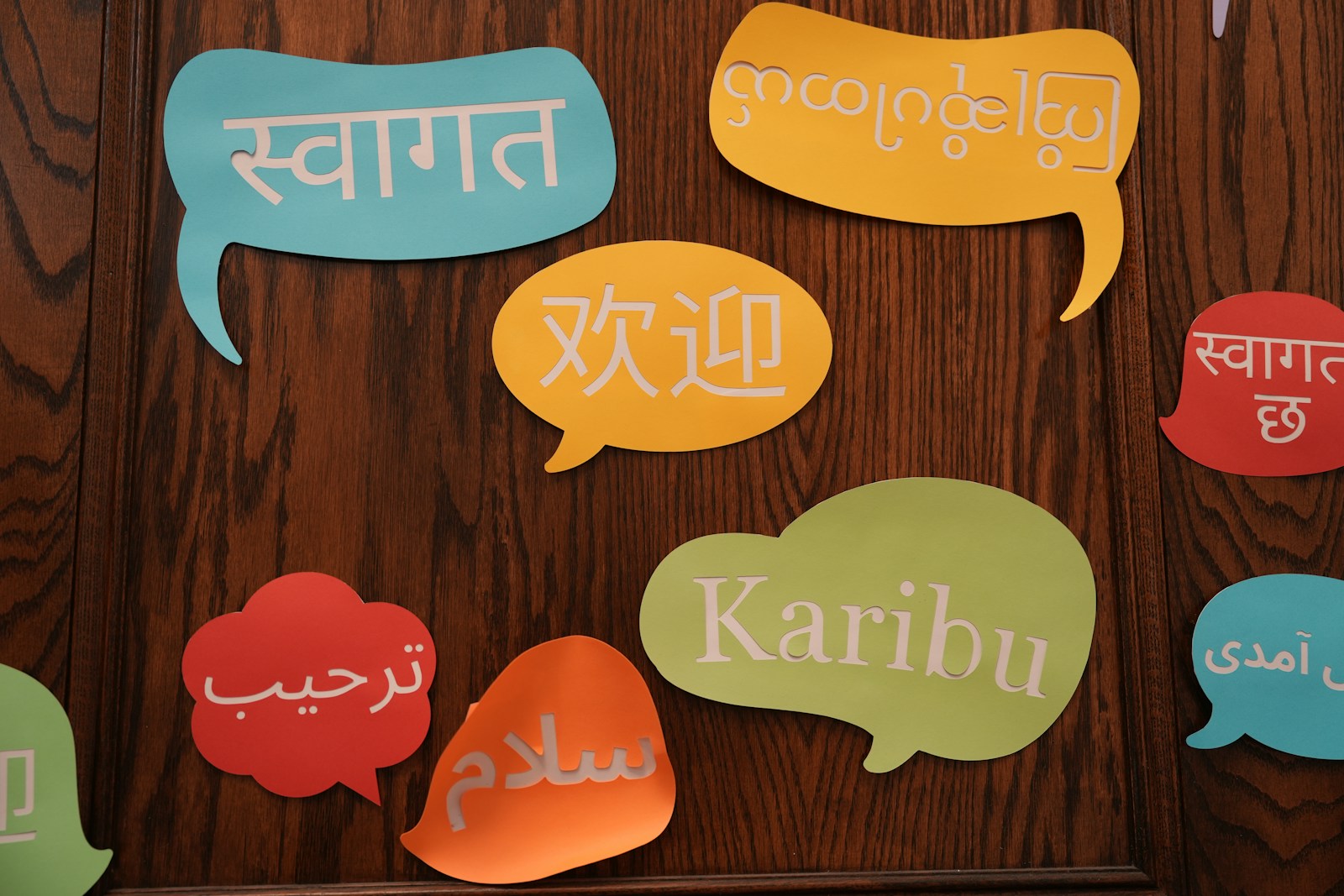
How do you check a chatbot name in other languages?
Check a chatbot name in every language your visitors use by asking a native speaker what it means, how it sounds and whether it is slang, because chat widgets such as PepoChat show the name exactly as you typed it, whatever language the visitor reads.
In PepoChat, the widget's own text, such as buttons and status lines, follows the visitor's browser in English, Spanish, French, German, Portuguese, Italian or Dutch, and the agent replies in the language the visitor writes in. The assistant name and greeting always appear as typed, so a Spanish speaker on an English-language site reads an English name and greeting above Spanish replies. Run four checks:
- Meaning. A coined word that is harmless in English can be slang or a rude word elsewhere, and a native speaker spots it in seconds.
- The AI label. German speakers abbreviate artificial intelligence as KI, and Spanish, French, Italian and Portuguese speakers as IA. If most visitors share one language, label in it, as in "Acme KI-Assistent"; if not, keep "AI".
- Sound. Say the name aloud with a native speaker, and if you run a voice assistant, listen to its text-to-speech voice pronounce it.
- Characters. Accented letters are fine, but skip emoji: PepoChat labels its typing indicator for screen readers with the name, as in "Nell is typing", so an emoji is read out by its description.
The guide to multilingual AI customer support covers the rest of a multilingual setup.
Which chatbot names should you avoid?
Avoid chatbot names that belong to another company's assistant, a teammate or a licensed profession, names that promise what the bot cannot do, and names confusingly similar to a trademark in your market.
| Avoid | Example | Why | Use instead |
|---|---|---|---|
| A bare human first name | Emma | Visitors may think a person is typing | Emma, AI assistant |
| Another vendor's bot name | Fin, Lyro, Hugo, Zia | Confusion with those products | Your brand plus a role |
| A famous assistant | Siri, Alexa | Well-known trademarks | Acme AI |
| A teammate's name | Dana, when Dana runs support | Customers cannot tell who said what | A role name |
| A licensed title | Nurse Nora, Dr. Smile | Implies a licensed professional | Front Desk, Smile Desk |
| A promise the bot cannot keep | Refund Bot | Visitors expect a refund | Returns Assistant |
Vendor names are the easiest trap. Intercom's AI agent is Fin, Tidio's is Lyro, Crisp's is Hugo and Zoho's assistant is Zia, according to each company's own site on 22 October 2026. They appear here only as examples of names to leave alone.
Staff names cause a quieter problem. In PepoChat, AI replies carry your logo and, in emailed transcripts, the assistant name, while your team's replies carry the operator's own name. A bot called Dana on a team with a real Dana makes it hard for a customer to know who said what, and blurs the moment a person takes over.
Trademarks are the expensive trap. Likelihood of confusion is the test the US trademark office applies before refusing a mark, and the USPTO explains that trademarks "don't have to be identical to be confusingly similar" and that goods or services can be related without being the same. Its counter-example is Dove soap and Dove ice cream bars, which coexist because the products are unrelated. Search the USPTO's Trademark Search and WIPO's Global Brand Database, which covers international registrations and participating national offices, and ask a trademark attorney before you register or print a name.
How do you test a chatbot name before launch?
Test a chatbot name by putting three finalists in front of real people and the real widget, checking what people expect from each, how it looks on a phone, how the bot describes itself and whether anyone takes it for a person.
- Shortlist three names from different themes, such as Acme AI, Order Help and "Nell, AI assistant", so the test compares approaches rather than spellings.
- Run a five-person expectation test. Show each person the header and greeting on a phone and ask who they think they are chatting with and what it can help with. Drop any name that gets the answer "a person".
- Check the header on the narrowest phone you can find.
- Say it aloud to someone who must spell it back, and to a native speaker of each language you serve.
- Search it in trademark registers and app stores, and with "AI" and "chatbot" added.
- Ask the bot about itself. In a test chat, ask "What's your name?" and "Am I talking to a real person?" Both answers should use the name and say it is an AI.
- Watch after launch. For four weeks, read transcripts for "are you a real person" and similar questions; if they keep coming, the label is not clear enough.
The chatbot test script has 40 more questions to run in the same session.
How to set the assistant name in PepoChat
In PepoChat, the assistant name is a required field under Widget Customization that takes up to 40 characters, defaults to "Support" and appears in the chat header and the Messages list, as of October 2026.
The customization docs cover the field, and the same name also labels the bot's replies in emailed transcripts and its typing indicator for screen readers. The logo you upload in the same card is the assistant's face in the header, the Messages list and on every AI reply, so a real logo serves better than a stock portrait.
Three details matter for disclosure. On the chat-first home screen, used when you have no published Help Center articles, the line under the name reads "AI assistant · online". Inside a conversation it reads "The team can also help", so the name and greeting must carry the AI label there. And the agent is not told the name in the field; its base instructions call it an AI support assistant.
So write the name into How to sound and behave, as the agent instructions guide describes: "Your name is Nell. You are Acme's AI assistant, not a person. If anyone asks, say so and offer to bring in the team." Add "Never say or imply that you are a human" to Never do this, and repeat the label in the greeting, where the welcome message examples can help. Then ask the two questions from step 6 in Test the agent, where test chats are free.
What to do next
- Pick three names from different themes, run the five-person test and check the winner on the narrowest phone you have.
- Put the AI label in the name, the greeting and the instructions together, and borrow the wording around it from the disclosure and privacy notice templates.
- To try names in a live widget, create a free workspace: the assistant name, greeting and Test the agent drawer are on every plan, including Free, and no credit card is needed.
Frequently asked questions
- What is a good name for a customer service chatbot?
- A good name is short, easy to say and spell, fits your brand and makes clear the assistant is an AI. Brand-plus-role names such as Acme Assistant or Acme AI are the safest start, because your brand is already yours. In our October 2026 test, names of up to 17 characters fitted PepoChat's chat header even on a 360-pixel-wide phone.
- Should a chatbot have a human name?
- Only with an AI label beside it. A bare first name invites visitors to assume a person is typing, which conflicts with disclosure rules such as Article 50 of the EU AI Act. A 2022 Journal of Marketing study also found that humanlike chatbots lowered satisfaction among angry customers, so a functional name suits complaint-heavy support better.
- Is it illegal to give a chatbot a human name?
- A name alone is rarely the problem; misleading people about who they are talking to is. California bans bots that mislead people about their artificial identity to drive a sale unless they disclose, and since 2 August 2026 the EU AI Act requires people to be told they are interacting with AI unless it is obvious. This is general information, not legal advice.
- How long should a chatbot name be?
- Short enough to fit a phone header, which in practice means about 17 characters or fewer. In PepoChat's widget, measured on 22 October 2026 across 164 names, every name up to 17 characters fitted the conversation header on a 360-pixel-wide phone, and every name of 21 or more was cut with an ellipsis. The field itself accepts up to 40 characters.
- Can I use the same name as another company's chatbot?
- Avoid it. Names such as Intercom's Fin, Tidio's Lyro, Crisp's Hugo and Zoho's Zia identify those companies' products, and a similar name in a related market can cause confusion. The USPTO notes that trademarks do not have to be identical to be confusingly similar. Search trademark registers, and ask a trademark attorney before you register a name.
- How do I change the chatbot's name in PepoChat?
- Open Widget Customization, edit the Assistant name field, which takes up to 40 characters and defaults to Support, and click Save Settings. The name appears in the chat header and the Messages list. As of October 2026 the agent is not told this name, so also add a line such as "Your name is Nell, Acme's AI assistant" to How to sound and behave.
Try this on your own site in ten minutes
PepoChat includes every feature on the free plan — 200 AI replies and 5 knowledge sources a month, no credit card.
Keep reading
Chatbase vs PepoChat: Which AI Support Agent Fits Your Team in 2026?
An honest side-by-side of Chatbase and PepoChat on pricing, free plan or trial, sources, handoff, booking, actions, channels and voice, and a pick by team type.
Intercom Fin Pricing Explained, and What a Flat-Plan Alternative Costs
What Intercom Fin's $0.99 per outcome adds up to once you count resolutions and seats, with a worked 2,000-conversation example and when a flat plan wins.