
How to Get Your Business Cited by ChatGPT and Perplexity: A Checklist
A 15-point checklist for getting your business cited by ChatGPT, Perplexity and Google AI Overviews: Bing indexing, AI crawlers, content shape and llms.txt.
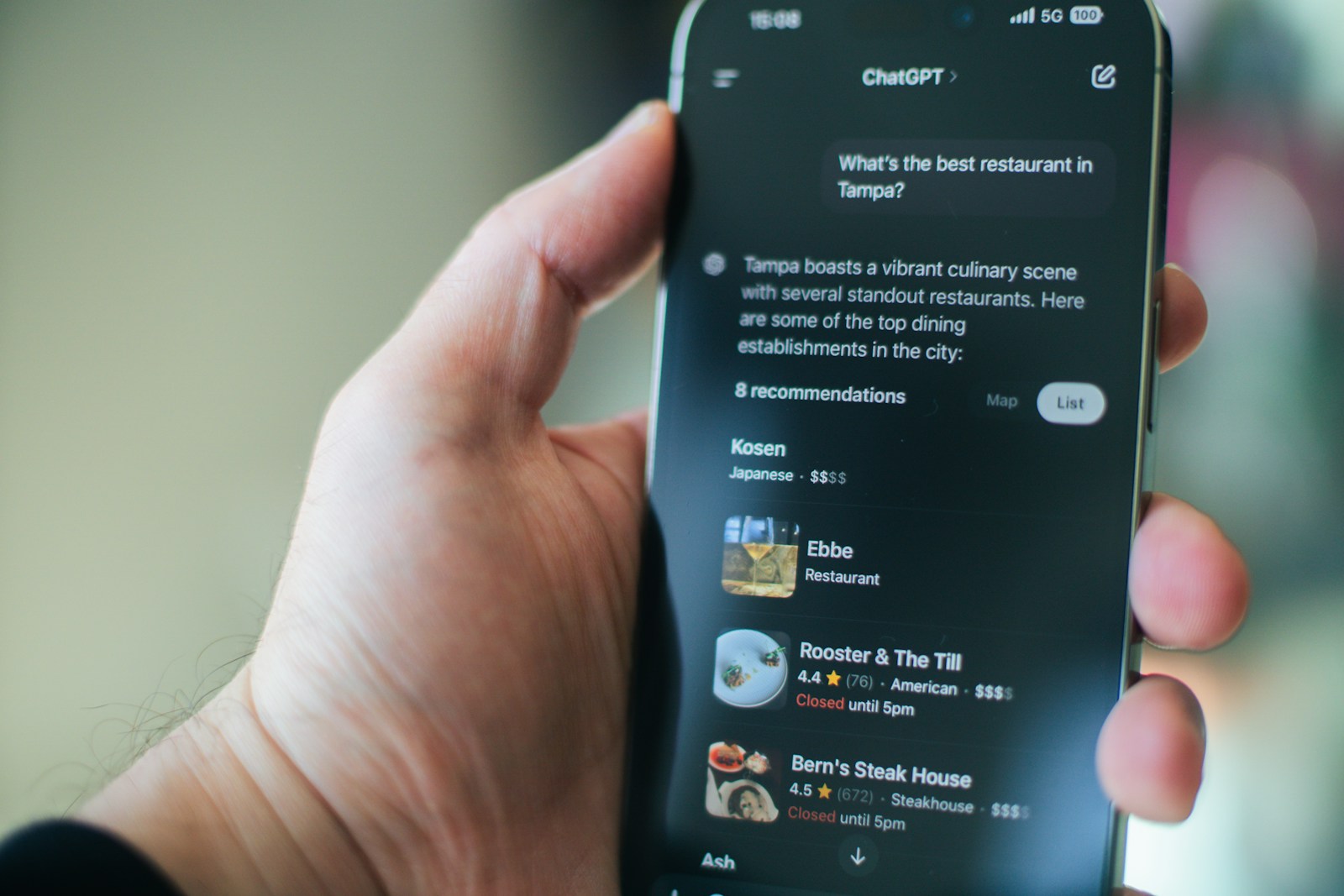
Short answer
As of October 2026, ChatGPT search finds pages through OpenAI's crawler, OAI-SearchBot, plus search partners (Microsoft says its Bing-based Web IQ is one), Perplexity uses PerplexityBot, and Google's AI Overviews use Google's normal index. Start with indexing: verify your site in Bing Webmaster Tools and Search Console, let those crawlers through robots.txt and your CDN, then publish pages that answer one question directly with dated tables. llms.txt is optional; no one can guarantee a citation.
When someone asks ChatGPT or Perplexity for the best accountant in town or the best scheduling app, the answer quotes a handful of web pages and links to them. Being one of those pages is something you can work towards, not something you can buy.
The checklist is for small business owners and marketers. It shows which crawler and index each engine relies on, gives 15 checks with a way to verify each, and walks through the fixes in order. To put ChatGPT on your own website instead, see whether you can use ChatGPT for customer service.
Every crawler rule below was read in the vendor's own documentation on 19 October 2026. The Bing example is pepochat.com, the site of PepoChat, the AI support agent we build; we report what we found and changed that day, not results.
How do ChatGPT, Perplexity and Google find the pages they cite?
Each engine answers from an index of pages its crawlers have already fetched and cites the passages it uses; some also fetch pages live for a user's question. A page missing from that index, or behind a rule that blocks the engine's crawler, cannot be cited. Retrieval-augmented generation is the technique behind all of them: the model searches first, then writes its answer from the retrieved pages and links to them.
| Answer engine | Index it answers from | Search crawler to allow | Training opt-out (search unaffected) | Fetcher for live user requests |
|---|---|---|---|---|
| ChatGPT search | OpenAI's own crawl plus search partners; Microsoft says its Bing-based Web IQ is one | OAI-SearchBot | GPTBot | ChatGPT-User (robots.txt may not apply) |
| Perplexity | Perplexity's own index | PerplexityBot | Not needed: Perplexity says PerplexityBot is not used to train AI models | Perplexity-User (generally ignores robots.txt) |
| Google AI Overviews and AI Mode | Google Search index | Googlebot | Google-Extended (also covers Gemini app grounding) | None listed |
| Microsoft Copilot | Bing index | Bingbot | None separate: noarchive and nocache also limit Copilot | None listed |
| Claude | Pages indexed by Claude-SearchBot | Claude-SearchBot | ClaudeBot | Claude-User (follows robots.txt) |
Crawler names, tokens and rules read in each company's crawler documentation, and the index note on Microsoft's Web IQ page, on 19 October 2026.
ChatGPT search. OpenAI's crawler documentation says OAI-SearchBot surfaces websites in ChatGPT's search features, that sites blocking it are left out of search answers, though they can still appear as plain navigational links, and that robots.txt changes take about 24 hours to apply. OpenAI names no search partners there, but Microsoft's Web IQ product page says the service powers ChatGPT, and a June 2026 Bing blog post says Web IQ is built on the Bing index. Peec AI, an AI search analytics company, reported in September 2026 that ChatGPT also pulls Google results, which OpenAI has not confirmed. So be indexed by Bing and Google, and let OAI-SearchBot in.
Perplexity keeps its own index. Its crawler page says PerplexityBot surfaces and links websites, is not used to train AI models and should be allowed along with its published IP ranges, and that changes take up to 24 hours. Perplexity-User fetches pages for a person's question and generally ignores robots.txt.
Google AI Overviews and AI Mode use the normal Search index. Google's guide to optimizing for generative AI features says a page must be indexed and eligible for a snippet, with no special files or markup needed. Search Console's Settings → Search generative AI control, rolled out to all sites by 31 August 2026, can exclude a site; the default is to include it.
Copilot and Claude. Microsoft Copilot answers from Bing's index, and Bing's documentation lists no training-only token: its noarchive meta tag stops Copilot from linking a page, and nocache limits Copilot to the URL, title and snippet. Claude's crawlers split the same way, and Anthropic says its bots honour robots.txt.
What should a small business check to get cited by AI search?
Fifteen things, in order. The first eleven decide whether an engine can find, fetch and read your pages; the next three decide whether it wants to quote them, and the last tells you whether any of it worked. Our own site failed checks 2, 3 and 6, as Step 1 shows.
| # | Check | Why it matters | How to verify | Tool |
|---|---|---|---|---|
| 1 | Site verified in Bing Webmaster Tools | Bing's index feeds Copilot, and Microsoft says it grounds ChatGPT through Web IQ | Site listed with data, usually within 48 hours | Bing Webmaster Tools |
| 2 | Sitemap registered on your canonical host | A sitemap on an old host lists redirects, not pages | Sitemaps report shows Success and the URL count you expect | Bing Webmaster Tools, Google Search Console |
| 3 | Key pages indexed in Bing | Unindexed pages cannot be retrieved | URL Inspection says the page is indexed, not a redirect | Bing URL Inspection |
| 4 | Key pages indexed in Google | AI Overviews use only indexed pages that can show a snippet | URL Inspection says the page is indexed | Google Search Console |
| 5 | Search generative AI control set to include | Excluding the site removes it from AI Overviews and AI Mode | Settings → Search generative AI | Google Search Console |
| 6 | IndexNow announces every new or changed page | Participating engines hear about changes at once instead of waiting for a crawl | IndexNow report lists HTML pages, not only images and fonts | Bing Webmaster Tools, CMS plugin or deploy script |
| 7 | robots.txt allows OAI-SearchBot, PerplexityBot, Claude-SearchBot, Bingbot and Googlebot | These tokens decide search inclusion | No Disallow: / under those names or under User-agent: * | Browser, Bing robots.txt tester |
| 8 | CDN and firewall let those crawlers through | A bot rule can return 403 while robots.txt says Allow | Crawler requests get HTTP 200 | Cloudflare AI Crawl Control, server logs, curl |
| 9 | One canonical host with permanent redirects | Switching between www and the bare domain can leave pages recorded as redirects | curl -I on the other host shows one 301 to the canonical URL | curl |
| 10 | No stray noindex, nosnippet or noarchive tags | Each removes or trims the page in AI answers | Page source and response headers | URL Inspection in both tools |
| 11 | Answers in the HTML, not only in scripts, tabs, images or PDFs | Crawlers may not render hidden or scripted content | Fetch the page and search the HTML for a key sentence | curl, View Source |
| 12 | Each page answers its heading in the first sentence, with a date | Engines lift short passages that answer the question | Read the first two sentences under each heading on their own | Your own review |
| 13 | Organization and Article structured data match the page | Ties your name, dates and authorship to the content | Markup card shows your JSON-LD without errors | Bing URL Inspection |
| 14 | Listed and reviewed on the sites your category uses | "Best" answers lean on review sites, lists and forums | Find your business on Google Business Profile, Yelp, G2 or Trustpilot | Those sites |
| 15 | AI referrals and citations measured | Shows which pages work and which fixes landed | AI Assistant channel, Generative AI performance, AI Performance | GA4, Search Console, Bing Webmaster Tools |
Checks and tools as documented by Bing, Google, OpenAI, Perplexity and Cloudflare on 19 October 2026.

Step 1: Why is your site in Google but not in Bing?
Because Google and Bing run separate crawlers and indexes, and many small businesses only ever told Google about their pages. The gap matters more in 2026: Bing's index feeds Copilot, and Microsoft says it reaches ChatGPT through Web IQ. Bing's help also says it does not index every page, even a submitted one.
How to get your pages into Bing
- Open Bing Webmaster Tools and choose Import from Google Search Console; your sites and sitemaps arrive already verified. Otherwise verify with an XML file, a meta tag or a DNS record.
- In Sitemaps, check that the sitemap on your canonical host shows a successful status and the URL count you expect. A sitemap registered long ago can point at an old host, as ours did.
- In URL Inspection, test your ten most important pages. Indexed is the status you want.
- In Submit URLs, paste the missing pages, one per line. Bing's URL submission help allows up to 10,000 URLs per domain per day, but the quota is set per site and can be far lower.
- Set up IndexNow so later changes are announced automatically.
IndexNow is an open protocol for telling search engines that a URL was added, updated or deleted. The IndexNow documentation has you host a text file named after your key at the site root and post up to 10,000 URLs per request, and participating engines share what you submit. Bing now recommends it over its own submission tools, and WordPress, Shopify, Wix and Cloudflare support it natively or through plugins. Google is not on indexnow.org's list of participating engines, so keep your sitemap in Search Console too.
What we found on pepochat.com
On 19 October 2026 we ran this check on our own site. Crawler access was fine; Bing was not.
| Check | What we found | What it meant |
|---|---|---|
| AI crawler access | OAI-SearchBot, GPTBot, ChatGPT-User, PerplexityBot and ClaudeBot all received HTTP 200, and robots.txt allowed them | Access was not the problem |
| Bing index coverage | 19 of the 149 URLs in the sitemap | Most of the site was missing from Bing |
| URL Inspection on blog posts | "Not indexed as this page is a redirect" | Bing first crawled them while the bare domain still redirected to www |
| Registered sitemaps | Only the www sitemap | The canonical host is now the bare domain |
| IndexNow submissions | About 1,100 URLs from Cloudflare's Crawler Hints, all fonts, SVGs and other cached files | No HTML page had ever been announced |
| AI Performance report | 12 Copilot citations in three months | A baseline to compare against |
Checked in pepochat.com's Bing Webmaster Tools and server responses on 19 October 2026.
The redirect finding explains the blog posts. We reversed that redirect later, but Bing's URL Inspection help notes that each redirect needs a fresh fetch that may not come soon, and the only sitemap Bing knew listed www addresses that now redirect too.
The IndexNow finding surprised us more. Cloudflare's documentation says Crawler Hints treats a cache MISS as the sign that content changed. Our HTML is served uncached, marked DYNAMIC, so pages never produce a miss while fonts and images do: Crawler Hints worked as designed, announcing our files and never our pages.
What we changed
- Submitted the missing pages by hand. Our URL Submission quota is 100 URLs a day, so the whole sitemap takes two days.
- Registered the bare-domain sitemap, the one robots.txt already points to.
- Wired IndexNow into the deploy: a key file at the site root, plus a script that waits for each deploy to go live and submits only the pages it changed.
Bing re-crawls on its own schedule, so we claim no results yet. If your site ever switched between www and the bare domain, changed hosts or moved behind a CDN, run the same checks.
Step 2: Can AI crawlers actually reach your pages?
Check two layers: the robots.txt rules crawlers read, and the CDN or firewall that answers their requests. A robots.txt file only states preferences, so a bot rule at your CDN can send OAI-SearchBot an error page while robots.txt says Allow.
In robots.txt, look for Disallow rules under User-agent: * or under OAI-SearchBot, PerplexityBot, Claude-SearchBot, Bingbot and Googlebot. Blocking a training crawler such as GPTBot or ClaudeBot does not remove you from search. A file that opts out of training but stays in search looks like this:
# Everyone may crawl, including OAI-SearchBot, PerplexityBot,
# Claude-SearchBot, Bingbot and Googlebot
User-agent: *
Allow: /

# Optional: opt out of AI training only. Search is unaffected.
User-agent: GPTBot
Disallow: /

User-agent: ClaudeBot
Disallow: /

Sitemap: https://www.example.com/sitemap.xml
Cloudflare's AI bot policies sort crawlers into Search, Agent and Training. Its documentation says new domains from 15 September 2026 block Training and Agent bots on pages that show ads, while Search stays allowed; Agent means chat fetchers acting for a person, such as ChatGPT-User and Perplexity-User. With Bot Preference Sync on and a policy set to block, Cloudflare also prepends matching Disallow lines to your robots.txt, so check the live file, not the copy in your CMS. Firewalls and security plugins can block crawlers too; OpenAI and Perplexity publish IP ranges for allow rules.
Then test from outside with the commands below; the comment above each one says what it checks.
# 1. The rules every crawler reads
curl -s https://www.example.com/robots.txt

# 2. Fetch a page as OAI-SearchBot and print the status (200 is good)
curl -s -o /dev/null -w "%{http_code}\n" \
  -A "Mozilla/5.0 AppleWebKit/537.36 (KHTML, like Gecko); compatible; OAI-SearchBot/1.4; +https://openai.com/searchbot" \
  https://www.example.com/pricing

# 3. The same as PerplexityBot
curl -s -o /dev/null -w "%{http_code}\n" \
  -A "Mozilla/5.0 AppleWebKit/537.36 (KHTML, like Gecko; compatible; PerplexityBot/1.0; +https://perplexity.ai/perplexitybot)" \
  https://www.example.com/pricing

# 4. Is the answer in the HTML a crawler receives? (1 or more means yes)
curl -s https://www.example.com/pricing | grep -c "Starter plan"

# 5. Does the other host redirect once to the canonical address?
curl -sI https://example.com/pricing | grep -iE "^(HTTP|location)"
A spoofed user agent tests only rules that match the user-agent string. CDNs often verify real crawlers by IP address, so your laptop can pass while the real bot is blocked. Confirm in Cloudflare's AI Crawl Control or your server logs, and run the Live URL test in Bing's URL Inspection, which fetches the page as Bingbot.
Step 3: What kind of content do ChatGPT and Perplexity cite?
Pages that answer one question directly, back the answer with specific dated facts and add something other pages lack. Engines retrieve passages, not whole sites, so the passage that states the answer plainly, with a number and a date, is the one that gets lifted.
The vendors agree. Bing's help for its AI Performance report suggests descriptive headings, concise sections, tables and FAQ-style content, backed by data and cited sources. Microsoft's October 2025 guide to AI search answers says assistants can often lift question-and-answer pairs word for word, and warns against hiding answers in tabs, PDFs or images. Google asks for first-hand experience, not a rewrite of what is already online.
Five shapes recur on pages that get quoted:
- A direct answer first. The first sentence under each heading answers it completely, so the passage stands alone.
- Tables with units and dates, plus a "last verified" line, like the 30-vendor table in our AI customer support pricing index.
- Dates in the text, such as "as of October 2026", so readers and models can judge freshness. A fan-out search is one of the extra searches an engine runs behind a single question, and Peec AI's study of 5 million ChatGPT fan-outs from April 2026 found the current year added in 5.44% of prompts.
- Original or sourced data: your own prices, measurements or test results with the method stated, or outside figures with their source and year. Our first response time benchmarks put the source, year and sample beside every number, as does the AI customer service statistics page.
- Self-contained paragraphs that name their subject and define each term in one sentence, so any paragraph can be quoted alone.
Some tactics do not help: Google's guide says to ignore chunking content, rewriting pages just for AI and chasing inauthentic mentions, and Bing's help says pages go uncited when they are less relevant, unclear, outdated or outperformed.
Step 4: Do you need an llms.txt file?
No, not to be cited. An llms.txt file is a Markdown file at your site root that summarises the site and links its most useful pages for AI agents. llmstxt.org presents it as a proposal, first published by Jeremy Howard on 3 September 2024 and now in a second version, last modified on 10 August 2026.
As of 19 October 2026, none of the crawler and search documentation we read from OpenAI, Perplexity, Microsoft and Anthropic mentions llms.txt, and Google says Google Search ignores such files, so keeping one neither helps nor harms there. The proposal says agents read the files on demand, mostly for software documentation.
Add one if you publish developer docs; for a local business, an hour in Bing Webmaster Tools is worth more. Our own site has an llms.txt, and it did nothing to prevent our Bing problem.
Step 5: Which structured data still matters in 2026?
Organization markup on the home page and Article markup on posts are the two worth having for most small sites. Structured data is machine-readable markup, usually JSON-LD, that states what a page is, who published it and when, using the schema.org vocabulary.
Google says structured data is not required for AI Overviews or AI Mode and that no special AI schema exists, but recommends keeping it as part of normal SEO, matched to the visible text. Bing's URL Inspection shows what it extracts from a page in its Markup card.
| Markup type | Put it on | What it states | Our advice, October 2026 |
|---|---|---|---|
| Organization | Home page | Name, logo, URL and official profiles | Add it |
| Article or BlogPosting | Posts and guides | Headline, author, published and updated dates | Add it |
| LocalBusiness | Home or contact page of a local firm | Address, opening hours, phone | Add it if you serve a place |
| Product with Offer | Product pages | Price, currency, availability | Add it if you sell online |
| FAQPage | FAQ pages | Questions and answers | Optional: Google stopped showing FAQ rich results on 7 May 2026 |
FAQ status read in Google's Search Central documentation changelog on 19 October 2026.
Keep every value identical to the visible page, as Google asks. Our guide to writing an FAQ page that Google and ChatGPT can use has the full timeline of Google's FAQ changes and a FAQPage example.
Step 6: Why do "best" answers cite review sites instead of your site?
Because "best X" questions are answered from lists, reviews and discussions that compare many businesses, so what other people say about you can count as much as your own pages.
Peec AI analysed 30 million sources cited by ChatGPT, Google AI Mode, Gemini, Perplexity and AI Overviews in the US and published the ranking on 31 March 2026: Reddit, YouTube, LinkedIn, Wikipedia, Forbes, G2, Yelp, Facebook, Medium and TechRadar were the ten most cited. ChatGPT's top five were Wikipedia, Reddit, Forbes, TechRadar and LinkedIn. Peec's fan-out study found ChatGPT adding "best" to 24.3% of the searches behind advice questions, with "reviews" the third most added word.
For a small business, that becomes a short list:
- Claim and complete your profiles where your category is reviewed: Google Business Profile and Yelp for local services, Tripadvisor for hospitality, G2 or Capterra for software, Trustpilot for online shops. Google's guide says Business Profile and Merchant Center details help you appear in its AI responses.
- Ask real customers for reviews after a good outcome; Google's guide says chasing inauthentic mentions does not help.
- Get into the lists that exist by sending accurate facts to the authors of "best X" articles in your niche.
- Publish short videos for the questions you hear most; YouTube was second in Peec's ranking.
- Answer in communities as yourself, saying who you are.
Step 7: Is your help center ready for AI engines and your own agent?
Only if its articles are public pages on your site. Help articles answer the specific questions people put to AI engines, such as how to cancel, and each one on its own page, with the question as its heading, is a candidate citation that can also feed your AI support agent.
Write each article once, on your website, where crawlers can reach it; the self-service help center guide covers which articles to write first. Then point your support tools at the same pages, so the answer a visitor gets in chat matches the one ChatGPT quotes.
In PepoChat, a website import reads your sitemap or crawls your site, up to 200 pages, honours robots.txt, keeps the main content and counts as one knowledge source, even on the free plan's limit of five; pages are re-fetched weekly. The built-in Help Center can import an existing docs site, up to 20 pages through its sitemap, and mirrors published articles into the knowledge base. Those articles appear in the chat widget's Help tab rather than as public pages, so for answer engines the copy on your website is the one that counts.
Keep one version of each fact, because contradictory pages are a common cause of wrong answers, as the guide to stopping chatbot hallucinations explains.
How do you measure AI search traffic and citations?
Use three free reports and keep citations and clicks apart: a page can be cited without anyone clicking through.
- Google Analytics 4 has an AI Assistant channel for visits from sources like ChatGPT, Gemini, DeepSeek, Copilot and Grok; visits from AI Overviews and AI Mode are excluded. Filter Session source for chatgpt.com and perplexity.ai to watch both engines.
- Google Search Console has a Generative AI performance report, rolled out to all sites by 31 August 2026, that counts impressions in AI Overviews and AI Mode by page, country and device.
- Bing Webmaster Tools has an AI Performance report that counts citations in Microsoft Copilot, Bing's AI summaries and some partner services, with the grounding queries behind them, over up to three months.
Track index coverage too, indexed pages against sitemap URLs, because it moves first; our baseline is 19 of 149 URLs in Bing and 12 Copilot citations in three months. For crawler access, your server logs or a CDN dashboard such as Cloudflare's AI Crawl Control show which AI crawlers came and how your site answered.
What llms.txt is, and what is and is not known about engines reading it, is covered in what is llms.txt?.
What to do next
- Today, open Bing Webmaster Tools, import your site from Search Console and inspect your ten most important URLs, then work down the checklist.
- Rewrite your most-asked pages so each heading is answered in its first sentence, using the patterns in the FAQ page guide.
- Put the same answers to work on your own site: create a free PepoChat workspace and import your sitemap, so your AI support agent answers from the pages you just fixed, with every feature on the free plan.
Frequently asked questions
- Does ChatGPT use Google or Bing?
- Both appear to feed it in part. OpenAI's crawler documentation says ChatGPT search surfaces sites through its own crawler, OAI-SearchBot, and names no search partners. Microsoft says its Bing-based Web IQ service powers ChatGPT, and Peec AI reported in September 2026 that Google results show up too, which OpenAI has not confirmed. As of October 2026, get indexed in both and allow OAI-SearchBot.
- Do I need an llms.txt file?
- No, not to be cited. llms.txt is a proposal, published at llmstxt.org, for a Markdown summary of your site that AI agents can read. As of 19 October 2026, Google says Google Search ignores it, and OpenAI's, Perplexity's and Bing's crawler documentation does not mention it. Add one if you publish developer docs, but fix indexing and crawler access first.
- Why does my site appear in Google but not Bing?
- Google and Bing crawl and index separately, and many sites only ever submitted a sitemap to Google Search Console. Bing may also have met redirects or errors on its first crawl, found few links to your site, or chosen not to index some pages. Import your site into Bing Webmaster Tools, submit the sitemap on your canonical host, inspect key URLs and set up IndexNow.
- How do I check whether AI crawlers can reach my site?
- Read your live robots.txt for Disallow rules covering OAI-SearchBot, PerplexityBot, Claude-SearchBot, Bingbot or Googlebot. Then request a page with curl using each crawler's user agent and look for HTTP 200. Because CDNs often verify bots by IP address, confirm in your CDN's crawler report, such as Cloudflare AI Crawl Control, or in server logs, and run Bing's Live URL test.
- Does blocking GPTBot stop ChatGPT from citing me?
- No. OpenAI treats its crawlers as independent settings: GPTBot collects content that may train its models, while OAI-SearchBot decides whether your pages appear in ChatGPT search answers. You can block GPTBot and still be cited. Blocking OAI-SearchBot keeps you out of ChatGPT search answers, although a page can still appear as a plain navigational link, per OpenAI's documentation read on 19 October 2026.
- How long does it take to get cited after fixing indexing?
- There is no fixed time. OpenAI and Perplexity say robots.txt changes reach their systems within about 24 hours, but indexing is slower: Google says recrawling takes from several days to several months, Bing says submitted pages are still assessed before indexing, and IndexNow says submission does not guarantee immediate indexing. Once pages are indexed, citations depend on whether they answer the question better than other sources do.
Try this on your own site in ten minutes
PepoChat includes every feature on the free plan — 200 AI replies and 5 knowledge sources a month, no credit card.
Keep reading
Chatbase vs PepoChat: Which AI Support Agent Fits Your Team in 2026?
An honest side-by-side of Chatbase and PepoChat on pricing, free plan or trial, sources, handoff, booking, actions, channels and voice, and a pick by team type.
Intercom Fin Pricing Explained, and What a Flat-Plan Alternative Costs
What Intercom Fin's $0.99 per outcome adds up to once you count resolutions and seats, with a worked 2,000-conversation example and when a flat plan wins.