
What Is Omnichannel? Meaning, Examples and Omnichannel vs Multichannel
Omnichannel means every channel a business runs, from chat to the store, shares one history. In a 2017 HBR study of 46,000 shoppers, 73% used several channels.

Short answer
Omnichannel is the practice of running every channel a business offers, such as web chat, email, phone and the shop counter, as one system with a shared customer history, so customers can switch channels without repeating themselves. The word joins omni- ("all") and channel, and it covers both retail and customer service. Multichannel offers several channels; omnichannel connects them. PepoChat answers web chat and, from $39 a month, phone calls from one knowledge base into one team inbox.
"Omnichannel" turns up in job ads, software pitches and retail strategy decks, usually without a definition. Most people who look it up want three answers: what the word means, how it differs from multichannel, and whether a small business needs it.
This guide answers all three, for both meanings of the word: retail and customer service. You get the dictionary meaning and origin, a one-question test, one customer's journey across chat, email and phone, the research, and a starting plan that needs no contact-center suite.
What is omnichannel?
Omnichannel is a way of selling and serving customers in which every channel they can use, from the website and chat to email, phone, messaging apps and the store itself, shares one customer record and one history. A customer can start in one channel and finish in another without starting over or repeating anything.
| Term | Word parts | In one sentence | Everyday example | Not the same as |
|---|---|---|---|---|
| Omnichannel | omni- ("all") + channel | Every channel works as one system around the customer | A phone call picks up where yesterday's chat stopped | Multichannel: many channels, each run on its own |
| Omnichannel customer service | Same word, applied to support | Help on any channel shares one history and one set of answers | The person on the phone already sees your chat | A help desk, which is a ticketing tool |
| Omnichannel retail | Same word, applied to selling | Browsing, buying, collecting and returning work across website, app and store | Order in the app, collect at the store | Click-and-collect alone, which is one linked journey |
The word means the same in both settings: the customer deals with one business, not a website team, a phone team and a store that never talk to each other.
Omnichannel meaning: where does the word come from?
Omnichannel means "all channels": the prefix omni- comes from the Latin omnis, "all", the same root as omnipresent. The Oxford Advanced Learner's Dictionary dates the word to the early 21st century and defines it as "combining different communication methods available to customers, for example online, via a mobile device or in a physical shop, in order to provide a good user experience". Cambridge puts it from the buyer's side: a way of selling that is "the same and equally good for the customer" on a computer, a phone app or in a shop.
Two retail sources show how business came to use the word. In the December 2011 issue of Harvard Business Review, Darrell Rigby of Bain & Company argued in "The Future of Shopping" that digital retailing was changing so much that it "requires a new name: omnichannel retailing", and listed channels from websites, stores and kiosks to call centers, social media and mobile devices. In June 2015 the Journal of Retailing published a special issue introduced by Peter Verhoef, P.K. Kannan and J. Jeffrey Inman, who wrote that multi-channel "was in vogue in the last decade" and that retail was moving to omni-channel, "a broader perspective on channels and how shoppers are influenced and move through channels in their search and buying process".
Customer service took up the word because customers move between channels while solving one problem. Omnichannel, omni-channel and omni channel are the same word.
What is omnichannel customer service?
Omnichannel customer service is support in which every channel a customer can contact you on feeds one conversation history and draws on one set of answers. Whoever picks up next, a person or an AI support agent, sees what was said before and gives the same answer the other channels give.
It rests on three things you can check. The customer record is one profile per person, matched on an email address, phone number or account ID, that every channel writes to. The conversation history is the full thread across channels on that record, including what was promised. The knowledge base is the single source of policies and answers that every channel, and every agent, answers from. Our guide to chatbot human handoff shows what the history must carry when a conversation moves from software to a person.
What is omnichannel retail?
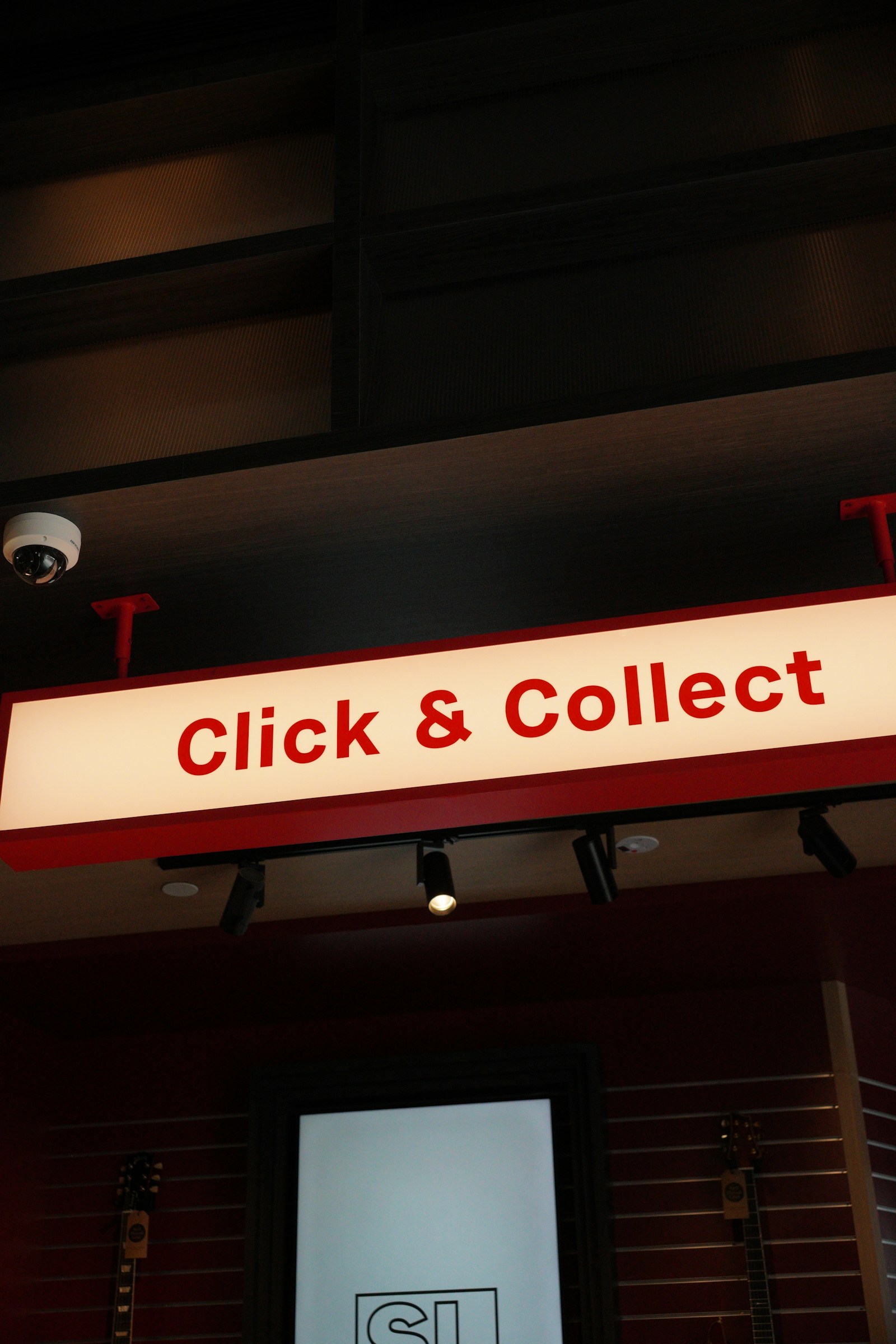
Omnichannel retail is selling through stores, websites, apps and other channels that share stock, orders and customer accounts, so a shopper can research, buy, collect and return through any of them. The familiar forms are buy online and pick up in store, curbside pickup, returning an online order at a counter, and an app that works inside the store.
Retail and service meet at the order: a shopper who orders online and collects in store asks "where is my order?" in whichever channel is closest, and every channel must give the same answer.
Omnichannel vs multichannel: what is the difference?
Multichannel means offering several channels; omnichannel means connecting them so they share one customer record and one history. Both can include exactly the same channels. The difference is whether the channels know about each other.
| Approach | What it means | Example | Does the customer repeat themselves? | Use this when |
|---|---|---|---|---|
| Single channel | One way to reach you | A bakery that takes orders only by phone | Nothing to switch between | Volume is tiny and one person answers |
| Multichannel | Several channels, each run on its own | Chat, email and phone, each with its own tool and no shared history | Yes, at every switch | Only as a stage on the way to connecting them |
| Cross-channel | Some journeys deliberately cross channels | Buy online, return in store; a chat that opens an email ticket | Sometimes: only linked journeys carry context | A few journeys cross channels and the rest stay put |
| Omnichannel | Every channel reads and writes one record | The phone agent sees yesterday's chat and the order | No | Customers often switch channels on one problem |
Some writers use "cross-channel" as a synonym for omnichannel; the test below works whatever the label.
The test targets a complaint most customers know: in a study of more than 75,000 people published in Harvard Business Review in 2010, 56% said they had had to re-explain an issue.
What does an omnichannel customer journey look like?
An omnichannel customer journey is one problem solved across several channels with nothing lost at each switch. Follow Maya, who buys a standing desk from a small online furniture shop, across web chat, email and phone.
- Web chat, Monday 9 pm. Maya asks the chat on the product page whether the desk fits a 120 cm alcove. The AI support agent answers from the product specification: the frame is 118 cm wide. She buys it, and because she gave her email at checkout, the chat is filed on her customer record next to the order.
- Email, Wednesday morning. The desk arrives with one leg missing. Maya replies to the shipping confirmation with a photo. The reply lands in the same inbox, on the same record, so the teammate who opens it sees the chat and the order above it.
- Email reply, Wednesday afternoon. The teammate promises a replacement leg by Thursday and notes the promise on the record.
- Phone, Thursday. Maya calls to check. Whoever answers, a person or a voice agent, matches her email to the record and opens with: "You're calling about the missing leg; it shipped this morning, and the tracking link is in your inbox."
- Resolved, Friday. The leg arrives. Maya explained the problem once, in one email, and never gave her order number twice.
In a multichannel version of the same week, step 4 starts with "Can I have your order number?", and nobody on the phone knows a replacement was promised. Same channels, same staff, twice the effort for Maya.
Which channels does omnichannel customer service include?
Omnichannel customer service can include any channel your customers use; the common ones are web chat, email, phone, SMS, WhatsApp, Messenger, Instagram, in-app chat and in person. No business needs all of them.
| Channel | Best for | Watch out for |
|---|---|---|
| Web chat | Quick questions while someone is on your site; instant AI answers | Visitors leave the page; you need a way to follow up |
| Detail, attachments and anything that needs a written record | Slow; threads split when customers start new ones | |
| Phone | Urgent, emotional or complicated problems | Costly per minute; nothing written down unless transcribed |
| SMS | Short updates such as delivery and appointment reminders | Opt-in rules vary by country; plain text only |
| Customers who live in the app | 24-hour reply window, then approved templates only | |
| Messenger and Instagram | Customers who find you on social media | 24-hour window; public comments mix with private messages |
| In-app chat | Logged-in users of a software product | Only reaches people already in the app |
| In person | Returns, fittings, demos and trust | Store staff need the same record as everyone else |
Meta's rules set the messaging windows. Its WhatsApp Business Platform documentation says a customer's message opens a 24-hour "customer service window" in which a business can send free-form replies; once it closes, the business can send only pre-approved template messages, and it may message only people who have opted in to hear from it. Messenger's platform policy also uses a 24-hour standard window, with a Human Agent tag that lets a person reply within a separate seven-day period. An omnichannel plan has to route those conversations fast enough to answer inside the window.
What are real examples of omnichannel retail and customer service?
Real examples include Target's Order Pickup and Drive Up, Starbucks app orders collected at the drive-thru, Amazon returns at Whole Foods Market, Apple's Genius Bar and Bank of America's Erica. Each comes from the company's own page, checked 12 November 2026, except KLM's, which is dated.
Target: order online, collect in the store or at the car
Target's help page says Order Pickup orders placed in the app or on Target.com are usually ready within 2 hours. With Drive Up, the shopper taps "I'm here" on arrival and a team member brings the order to the car. Most orders are held for three days, and a Drive Up return starts from the order details page.
Starbucks: the app and the drive-thru
Starbucks Rewards members can order ahead in the Starbucks app, choose drive-thru pickup and tell the barista when they pull in.
Amazon and Whole Foods Market: an online order returned at a counter
Whole Foods Market's page explains that you start an Amazon return in your Amazon account, choose Whole Foods Dropoff, and show the QR code from the Amazon app or the confirmation email at the Customer Service desk or Amazon Counter, with no box or label. An order placed on one company's website is closed out at another channel's counter.
Apple: store, app, phone and repair status
Apple's Genius Bar page offers in-person help by reservation, manages reservations in the Apple Support app, lists a phone number, and tells customers to sign in to Apple Support for current or recent repairs, so a repair started at the counter can be followed online.
Bank of America: an AI assistant that hands over
Bank of America says its virtual assistant Erica, in the Mobile Banking app, finds answers to questions and "can connect you to a specialist by phone or chat". It is a service example of AI and people working one journey across channels.
KLM: messaging after a web booking (2017)
In a September 2017 announcement of a pilot with WhatsApp, KLM said it was the first airline with a verified WhatsApp business account, offering booking confirmations, check-in notifications, boarding passes, flight status updates and questions in 10 languages on WhatsApp to customers who booked or checked in on KLM.com and opted in. The booking made on the website followed the traveller into the messaging app.
Does omnichannel work? What the research shows
The evidence that omnichannel pays is correlational but consistent: shoppers who use more channels spend more, and customers who must repeat themselves are less loyal. Two Harvard Business Review studies with published methods are the ones worth quoting.
| Study | Who and when | Method | Key findings |
|---|---|---|---|
| Sopadjieva, Dholakia and Benjamin, HBR, January 2017 | Just over 46,000 shoppers of one US retailer with hundreds of stores, June 2015 to August 2016 | Survey of each shopper's journey and the channels used | 73% used several channels; on average they spent 4% more per store visit and 10% more online than single-channel shoppers; 4 or more channels: 9% more in store than one channel; 23% more repeat store trips within six months |
| Dixon, Freeman and Toman, HBR, July-August 2010 | More than 75,000 people who contacted service by phone or self-service | Customer Contact Council survey plus interviews with service leaders | 56% had to re-explain an issue; 57% had to switch from the web to the phone; 62% had to contact the company repeatedly |
In the 2017 study of 46,000 shoppers, only 7% shopped online only and 20% only in stores. Omnichannel shoppers who researched online before visiting spent 13% more in the store. The authors are careful about cause: they write that the results are correlations, and that it remains open whether loyal customers simply use more channels or whether richer journeys make customers loyal.
The 2010 study is the service side of the story. It found that 57% of inbound calls came from customers who had visited the company's website first, exactly the switch an omnichannel setup is meant to absorb, and its authors advised minimising the need for customers to switch service channels.
What do you need for omnichannel customer service?
You need five things: one customer record, one conversation history, one shared inbox, one knowledge base and routing rules. Software helps with each, but each is first a decision about how your team works.
One customer record
Pick the identifier every channel will match on, usually an email address, sometimes a phone number or account ID. Ask for it early and attach every conversation to it.
One conversation history
Every message, call transcript and promise goes on the record, in time order, visible to whoever answers next.
One shared inbox
A shared inbox is a single queue where your team sees and answers conversations from every connected channel. If chat lives in one tool and email in another, someone has to copy context between them, and that is exactly where it gets lost.

One knowledge base
Answers come from one maintained source: prices, policies, shipping times, opening hours. When the website says 30 days for returns and the phone script says 14, customers learn to ask twice and believe neither.
Routing
Routing is the set of rules that decides who or what handles a conversation: the AI first, a person for refunds, the right language, the on-call teammate after hours. Our guide to 24/7 support without a night shift covers routing for the hours nobody is at a desk.
How can a small business start with omnichannel customer service?
Start with the two channels your customers already use, one inbox and one knowledge base; you do not need a contact-center suite. This plan fits a team of one to ten.
- Count last month's contacts by channel. Pick the top two. A channel with a handful of messages a month can wait.
- Bring both into one inbox. If your current tools cannot share one, choose the tool that can before you add anything else.
- Write one knowledge base. Put your 30 most common answers in one place and point every channel at it, including any AI.
- Capture one identifier early. Ask for an email in chat before a follow-up is needed, and ask callers for the same email.
- Publish reply times per channel. For example: "Chat: instant AI answers, a person within 2 hours on weekdays. Email: within one business day." Then keep them.
- Add a third channel only when the first two run without repeat contacts.
An AI support agent such as PepoChat can answer the chat window at any hour, while the team handles what it hands over.
How do you measure omnichannel customer service?
You measure omnichannel customer service by how often customers have to come back or repeat themselves, not by how many channels you offer. Four measures cover it.
| Measure | How to calculate it | Direction you want |
|---|---|---|
| Repeat contact rate | Contacts from customers who already contacted you about the same issue in the previous 7 to 14 days, divided by all contacts | Down |
| Re-explain rate | Share of "yes" answers to "Did you have to repeat information you had already given us?" | Down |
| Channels per issue | Channels a customer used before the issue was resolved | Down, or flat as you add channels |
| Answer consistency | Mismatches when you ask the same 10 questions on every channel each month | Zero |
The 7 to 14 day window comes from the 2010 study's authors, who recommended tracking repeat calls instead of first contact resolution (FCR) because it also catches callbacks about related problems. Keep the per-channel basics, such as first response time, alongside. PepoChat's analytics page, for example, shows conversations by channel as well as the share the AI resolved without the team.
How is AI changing omnichannel customer service?
AI lets one agent answer on several channels from the same knowledge base, so chat and phone draw on the same answers. Before AI agents, consistency depended on training every person on every channel.
Three things improve. Answers stay consistent because they come from one source. Coverage reaches nights and weekends on every channel the agent runs on. And the handoff to a person can carry the full transcript; our guide to AI voice agents for customer support shows what that looks like on a phone line.
AI does not fix the plumbing. If the chat agent cannot see the email thread, it repeats the silo faster. Each channel also keeps its own shape: a voice agent must keep answers short, and a free-form WhatsApp reply must land inside Meta's 24-hour window. PepoChat, for example, runs one agent on website chat and phone calls, with both landing in one team inbox.
What are the most common omnichannel mistakes?
The most common omnichannel mistake is opening channels nobody staffs. Five more follow close behind.
- Channels nobody answers. An Instagram inbox checked once a week tells customers you are not listening. Staff it or close it.
- A different answer on each channel. The website, the phone script and the chatbot each quote a different returns window.
- Sending customers elsewhere. "Please email us" from a chat that could have answered.
- Asking for the same details on every channel. The chat already had the order number; the phone call asks again.
- An AI with its own content. A bot trained on last year's FAQ while the team works from this year's policy.
- Counting channels instead of journeys. Reporting "we are on eight channels" while repeat contacts climb.
What is the difference between an omnichannel contact center and a help desk?
An omnichannel contact center is software, usually with a team behind it, that routes live phone calls, chats, emails, texts and social messages into one queue, with skills-based routing, call handling and real-time staffing views. A help desk is the team and its ticketing software, which turns each request into a tracked ticket with statuses, assignment and service-level timers, usually email-first with other channels added. Small teams usually need a help desk with a few connected channels, while contact-center software earns its cost when many agents handle live conversations at once.
How PepoChat fits omnichannel customer service
PepoChat is an AI support agent, not a full omnichannel suite: web widget and phone today; WhatsApp and Messenger in limited rollout. PepoChat is our product; we include it where it fits and say where other tools are the better choice.
The website chat widget and a hosted chat page work on every plan, including Free with 100 AI replies a month. On the paid plans, from Starter at $39 a month, the same agent also takes voice calls in the widget and inbound calls on your own Twilio number or SIP trunk, with the same knowledge base, actions, booking and human handoff; one started minute counts as 6 AI replies. Every conversation lands in one team inbox, calls tagged Voice or Phone with their transcripts, and contacts are matched by email, so a visitor's chats collect on one contact record.
The limits: there is no email or SMS channel, and inbox replies are not emailed to the visitor; teammates use Send Email for that. A phone caller appears as "Caller ending" plus the last four digits and is not matched to a chat contact automatically. WhatsApp and Messenger connections are not open to all workspaces yet. If you need email, SMS and social in one queue today, pair PepoChat with a help desk (its actions can create tickets in Zendesk, Freshdesk or Zoho Desk) or choose a contact-center tool. You can start on the free plan without a credit card and add phone later.
What to do next
- Decide who answers first on your busiest channel, a person or an AI, with live chat vs chatbot.
- If phone is one of your two channels, read how to connect a phone number to an AI agent.
- Check which plan covers the channels you need on the pricing page.
- Create a free PepoChat workspace, connect your website as a knowledge source and watch which questions arrive on which channel for two weeks.
- Related explainers: What is a help desk?, What is a knowledge base? and What is a chatbot?.
Frequently asked questions
- What is an omnichannel strategy?
- An omnichannel strategy is a plan for connecting the channels a business already runs, so each one shares the customer record, the conversation history and the same answers. It names which channels to support, which identifier links a customer across them, who answers where and when, and how success is measured, usually by fewer repeat contacts rather than by the number of channels offered.
- Is omnichannel marketing the same as omnichannel customer service?
- No. Omnichannel marketing coordinates the messages a business sends, such as ads, emails, social posts and in-store promotions, so a customer sees one consistent story and offers that reflect what they already did. Omnichannel customer service connects the conversations customers start, so help on any channel shares one history. Both rely on one customer record, but different teams usually own them.
- How many channels do you need to be omnichannel?
- There is no minimum. Two channels that share one customer record and one history already pass the test, because a customer can switch between them without repeating anything. Eight channels that do not share a history are still multichannel. In the 2017 Harvard Business Review study of 46,000 shoppers, the researchers counted each app, in-store digital tool and shopping venue as a separate channel.
- Is an AI chatbot omnichannel?
- Not by itself. A chatbot is one channel; it becomes part of an omnichannel setup when its conversations land in the same inbox and customer record as your other channels and it answers from the same knowledge base. PepoChat, for example, runs one AI support agent on website chat and, on paid plans, phone calls, with every conversation in one team inbox, but it has no email or SMS channel.
- Does a small business need omnichannel customer service?
- A small business needs the core of it: customers should never repeat themselves when they move from chat to phone or email. That takes one inbox, one knowledge base and one identifier per customer, not a contact-center suite. PepoChat's free plan covers website chat and the team inbox with 100 AI replies a month; phone calls start on Starter at $39 a month.
- What is the opposite of omnichannel?
- The opposite of omnichannel is a siloed setup, where each channel runs on its own tool, team and data, so customers must start over whenever they switch. Single-channel businesses, which offer only one way to reach them, avoid the problem by having nothing to switch between. Multichannel sits in the middle: several channels are offered, but they are not connected.
Try this on your own site in ten minutes
PepoChat includes every chat feature on the free plan — 100 AI replies and 5 knowledge sources a month, no credit card.
Keep reading
Chatbase vs PepoChat: Which AI Support Agent Fits Your Team in 2026?
An honest side-by-side of Chatbase and PepoChat on pricing, free plan or trial, sources, handoff, booking, actions, channels and voice, and a pick by team type.
Intercom Fin Pricing Explained, and What a Flat-Plan Alternative Costs
What Intercom Fin's $0.99 per outcome adds up to once you count resolutions and seats, with a worked 2,000-conversation example and when a flat plan wins.